

Why in News:
A diesel fuel spill from a ship that sank recently spreads to the Greenland fjord.
Background:
- A fjord is a long, deep, narrow body of water extending inland.
- Typically located in U-shaped valleys with steep rock walls on both sides.
- Fjords are primarily found in Norway, Chile, New Zealand, Canada, Greenland, and Alaska (U.S.).
- Formed over several ice ages by slow-moving glaciers.
- Glaciers eroded the top ice layers and sediment below, with meltwater further carving the land.
- Many fjords are deeper than the seas that flow into them due to this erosion.
- The fjord’s mouth (where it meets the sea) often contains rock deposits left by glaciers, making it shallower than the main fjord body.
- Shallow mouths create fast-moving water, including strong currents and saltwater rapids.
- Fjords are generally deeper in the middle and upper reaches due to more active glacial erosion near the glacier’s source.
- The shallow thresholds often lead to stagnant water at the bottom, rich in black mud containing hydrogen sulfide.
- Fjords may include features like coral reefs and rocky islands called skerries.

Why in News:
Megastar Chiranjeevi has been officially acknowledged by Guinness World Records as the most prolific actor and dancer in the Indian film industry. Over his 45-year career, he has executed an incredible 24,000 distinct dance moves in 537 songs across 156 films.
Background:
- Chiranjeevi, a renowned figure in Indian cinema, has gained recognition not just for his acting but also for his exceptional dancing skills.
- Spanning a career of more than four decades, he has delivered an impressive number of dance performances in his films.
- Guinness World Records has officially recognized his achievement, highlighting the sheer volume of dance moves (24,000) he has performed in hundreds of songs.
- This achievement underscores his lasting impact on Indian cinema, both as an actor and a dancer, setting a benchmark in the industry.

Why in News:
Russian cosmonauts Oleg Kononenko and Nikolai Chub have established a new record for the longest single mission aboard the International Space Station (ISS), surpassing the previous record held by cosmonauts Sergei Prokopyev, Dmitry Petelin, and NASA astronaut Francisco Rubio, who spent 370 days aboard the ISS between September 2022 and September 2023.
- Oleg Kononenko and Nikolai Chub, Russian cosmonauts, have broken the record for the longest continuous stay aboard the ISS, previously set by a group of astronauts and cosmonauts.
- The prior record of 370 days was held by Russian cosmonauts Sergei Prokopyev, Dmitry Petelin, and NASA astronaut Francisco Rubio, who completed their mission spanning one year.
- This new achievement by Kononenko and Chub highlights the ongoing efforts in long-duration space missions, which are crucial for studying the effects of extended stays in space on human health and preparing for future exploration, including missions to Mars.
Why in News:
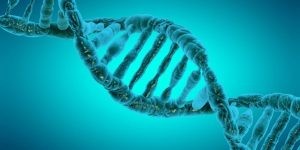
Epigenetics plays a critical role in human health by regulating gene expression without the direct modification of DNA sequence.
Background:
- Epigenetics is the study of how cells control gene activity without altering the DNA sequence.
- The prefix “epi-” means “on” or “above” in Greek, indicating that epigenetic factors are beyond the genetic code.
- Epigenetic changes are modifications to DNA that regulate whether genes are switched on or off without changing the DNA sequence itself.
- These modifications are attached to DNA but do not alter the sequence of its building blocks.
- The complete set of DNA in a cell, including all epigenetic modifications regulating gene expression, is called the epigenome.
- Since epigenetic changes control gene activity, they influence the production of proteins, ensuring that each cell produces only the necessary proteins for its function (e.g., bone growth proteins are not made in muscle cells).
- Epigenetic patterns vary between individuals, tissues within a person, and even cells within the same tissue.
- Environmental factors, like diet and pollutant exposure, can affect the epigenome.
- Some epigenetic modifications are passed on as cells divide, and, in certain cases, these changes can be inherited across generations.
- Errors in epigenetic processes, such as modifying the wrong gene or failing to modify a gene or histone, can lead to abnormal gene activity.
- These epigenetic errors can cause genetic disorders, and conditions like cancer, metabolic disorders, and degenerative diseases are linked to such errors.